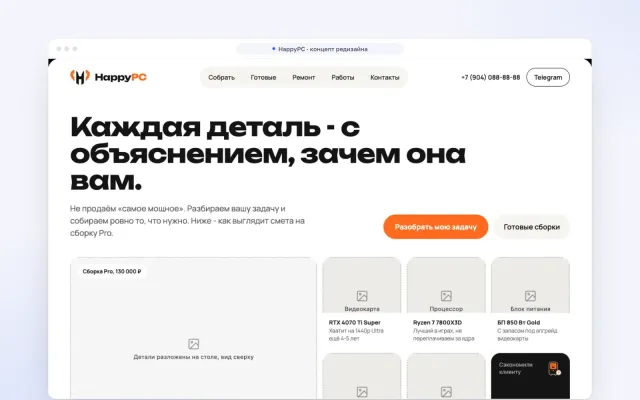
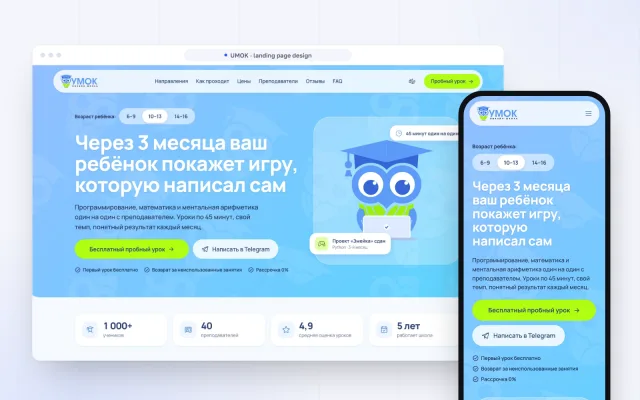
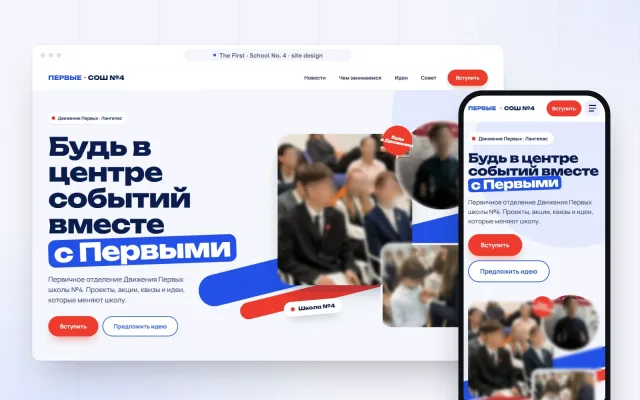
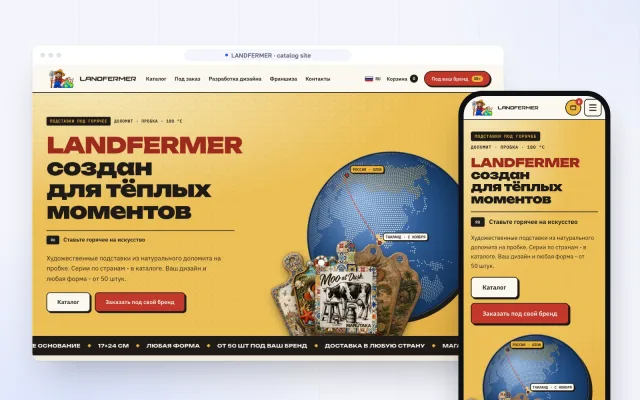


Landing Page Offer: How to Write One in an Evening
You are launching a landing page but do not know what to write on the main screen. "We sell windows" sounds boring, "revolution in glazing" sounds empty. An offer is not a slogan and not a product description. It is a short phrase that answers the visitor's question: "What will I get and why does this solve my problem right now". If someone does not understand in three seconds why they need your service, they leave. This article is an algorithm for how to formulate an offer in one evening, without creative agencies and without a week of thinking.
What an offer is and why people confuse it with a slogan
An offer is a concrete proposal that a person sees first. Not the company name, not the mission, but what they will get if they click the button. A slogan can be memorable, an offer must sell.
Bad example: "We make your business better". Good: "Set up contextual advertising in three days - first leads in a week". The difference is in specifics: the second phrase says what will be done, in what timeframe, and what the person gets as output.
If after reading the main screen the visitor did not understand whether the service suits them or not, the offer does not work. The task is not to please everyone, but to filter out the wrong people and hook the right ones.
Step 1: Write down three main customer pain points
Take a sheet of paper or a text file and write three problems the client comes with. Not abstract ones ("wants more sales"), but concrete ones ("losing leads because the site takes ten seconds to load").
If you have already worked with clients, recall what they said on the first call. If you have not worked yet - call three acquaintances from the target audience and ask directly: what prevents them from doing this themselves, what annoys them in existing solutions.
Example for a web studio: the client fears that a freelancer will disappear mid-project; does not understand how much it will cost; does not want to wait three months. These three pains are the foundation of the offer.
Step 2: Formulate the result, not the process
The client does not care what you write code in or how many iterations the design goes through. They care what they will get: a finished landing page that accepts payments, or a Telegram bot that answers frequent questions without manager involvement.
Bad: "Develop a React site with responsive layout". Good: "Build a landing page that loads in one second and accepts online payments". The first phrase is about technology, the second is about what works for the client.
Write in one sentence what the person will get in a week, a month, or three months after payment. If you cannot fit it into one sentence - the offer is blurred, break the service into parts.
Step 3: Add a timeframe or condition that removes fear
A person is afraid to pay and get nothing. Or pay now and see results in six months. The offer must remove this fear with a concrete condition.
Options: fixed timeframe ("launch in two weeks"), staged payment ("pay after design approval"), trial period ("first week of support free so you can evaluate response speed").
At EFIMOV DEV we work like this: the estimate is divided into stages, the client sees progress in a Telegram chat, each stage is accepted separately. This is not a unique feature - it is a basic way to remove the fear of "I'll pay and they'll disappear". Write your own condition into the offer if it is actually achievable.
Step 4: Check the offer for specificity - the three-second test
Show the offer to someone who does not know your business. Time three seconds. Then ask: what are we offering, who needs this, what happens after ordering.
If they could not answer - the offer is too general. "We build sites for business" does not pass the test: unclear for which business, what sites, in what timeframe. "Landing page for an auto service with online booking - ready in two weeks" passes.
Common mistake - cramming several services into the offer. "Sites, bots, apps, design, support" is not an offer, it is a catalogue. One landing page - one proposal. If there are several services, make separate pages.
Step 5: Remove adjectives and check for clichés
Words like "quality", "reliable", "modern", "effective" add no value. They are markers of empty text. If you remove the adjective and the meaning does not change - it is unnecessary.
"Develop a quality site" = "develop a site". The word "quality" clarifies nothing. Better: "develop a site adapted for mobile - 70% of your clients will visit from a phone".
Go through the text and cross out everything that sounds like an ad for detergent. The offer should read like a technical specification, not like a line from a TV commercial.
Common mistakes: what breaks an offer
First mistake - the offer is written for competitors, not for the client. "Using React and TypeScript" matters to a developer, but the client cares that the site will not crash during a visitor surge.
Second - blurred audience. "Sites for everyone" hooks no one. Better: "landing page for local services - tradespeople, auto repair, cleaning". A person must recognise themselves in the first line.
Third - no call to action. The offer ends with a description, and then - emptiness. Always add a button: "Submit request", "Get quote", "Discuss project". Without a button a person does not know what to do next.
How to test the offer before launching ads
Before pouring budget into advertising, test the offer on a small sample. Run an ad campaign with a modest budget and several headline variants.
Look not at clicks but at conversion to request. If the offer "Landing page in two weeks" gives 8% CTR and "Landing page with online payment in two weeks" gives 12%, the second hooks harder.
Another method - show two offer variants to acquaintances from the target audience in the format "which is clearer". Do not ask "which do you like" - these are different things. A beautiful phrase may be liked, but people will buy based on a clear one.
What to do if you have several services
Do not try to cram all services into one offer. This blurs the message. If you build sites, bots, and apps - make a separate landing page for each service or different blocks on the main page.
At EFIMOV DEV the first step is free: a homepage mockup and project review for sites and stores, a project review for bots and web services - then the exact quote. A person immediately understands which direction to look. The exact quote is formed after a brief, but the entry threshold is visible before the first call.
If you are making a single-page site, put the main offer on the first screen, the rest in blocks below. The main thing is that the first screen answers one question: for whom and why.
If this is already on your plate, here is how we do it end to end: Landing page development.
Frequently asked
Can I use the offer from the homepage for advertising?+
You can, but you often have to shorten it: ads have strict character limits. Take the core of the offer - result and timeframe - and fit it to the limit. If the offer does not fit, it is too long for the landing page too.
Do I need to change the offer if the service is seasonal?+
Yes. For air conditioners in summer the offer is built around "install before the heat", in winter - around price and planning. The client's pain changes, the offer changes with it.
What to do if competitors write the same thing?+
Look at what they do NOT write. If everyone writes about speed, write about transparent estimates. If everyone writes about experience, write about fixed deadlines. Look for the uncovered pain.
How many times can I change the offer after launch?+
As many as needed. The first version is a hypothesis. After two weeks look at conversion, after a month - change if it did not work. Just do not change every day, let the statistics accumulate.