


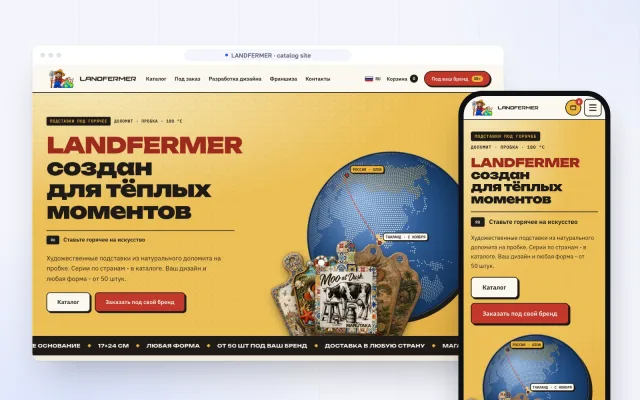



Website Audit Before Running Ads: What to Check
You're ready to run ads: targeting configured, copy written, budget allocated. Traffic starts flowing, the counter spins - but no leads. Common cause: your site isn't technically or functionally ready to receive visitors. Advertising works like a magnifying glass - it amplifies both the good and the bad. If your site has problems, you'll just burn through money faster with nothing to show for it. Before launching a campaign, audit your website and verify it can actually convert traffic into inquiries.
Check that the site opens on all devices
Start simple: open the site on a smartphone. Half your traffic comes from mobile, and if everything falls apart there, you lose half your budget immediately.
Most common problems: buttons too small to tap accurately, text overlaps images, contact forms run off the edge of the screen, phone numbers aren't tappable - can't call with one tap.
Open the site on at least two devices: an iPhone and an Android phone. Check the homepage, a service page, and the inquiry form. Scroll all the way down. Try filling out the form - are all fields visible, does the button work, does the keyboard cover half the screen?
If there's no responsive version at all - that's critical. You need mobile layout done before launching ads, or you're throwing money away.
Check loading speed
A slow site loses visitors before they even see your offer. If a page loads longer than three seconds, every extra second costs you part of your audience. Someone clicked your ad, saw a white screen - and left. You paid for the click, but they didn't even read the headline.
You can check speed for free: open Google's PageSpeed Insights, paste your site address. The service shows a score from 0 to 100 separately for mobile and desktop, plus a list of specific problems.
What counts as normal: score above 50 is tolerable, above 70 is good, above 90 is excellent. Below 30 is a failure - the site needs optimization before ads.
Typical causes of slow loading: images weighing several megabytes each, pile of third-party scripts (counters, widgets, chat), heavy fonts, no caching configured, weak hosting. Some of this can be fixed in a couple hours: compress images, remove unnecessary scripts, enable cache.
Make sure inquiry forms work
Most frustrating situation: someone filled out a form, hit Submit - and nothing happened. Or an error popped up. Or the form submitted but the email never arrived. The customer thinks they left an inquiry, you think there are no inquiries - when actually the form is just broken.
Check every form on the site: contact form, calculator, callback request, subscription. Fill each one with real data and submit. The email should arrive in your inbox with all the fields the visitor filled out.
Common problems: emails land in spam (check that folder), form points to an old address or the developer's email, captcha doesn't work and blocks submission, required field isn't marked with an asterisk - people skip it and get an error.
Also check the phone number in the site header: call it. Make sure it's your current number, displays correctly, and is clickable on mobile so you can dial immediately.
Check the visitor path from entry to inquiry
Imagine you're a customer who clicked an ad. You land on the site. What next? Is it immediately clear where you landed and what you can get here? Do you see a button to submit an inquiry?
If ads lead to the homepage, check: headline and offer are clear within three seconds, there's a noticeable action button (Order, Get Consultation, Calculate Cost), form or contacts in a prominent place - no need to scroll three screens.
Better to send traffic not to the homepage but to a landing page for a specific service or offer. Then the person immediately sees the answer to their query. If you're advertising apartment renovation - send them to the renovation page, not the homepage with portfolio and company history.
Walk this path yourself: open the site as if for the first time. Time it. How many seconds to understand what you do? How many clicks to the inquiry form? More than two is already bad.
What to check in copy and offer
A visitor should understand within seconds whether they landed where they wanted. If the headline is generic (We're the best! Welcome!) and the service essence is buried in the third paragraph in small print - they'll leave.
Check the headline on the homepage and target pages. It should explain what you do. Bad: Team of professionals. Good: Apartment renovation in 60 days. Bad: Individual approach. Good: React website development for small business.
Check whether the site has specifics: work examples, case studies, prices at least as a range (from... to... or starting at...), timelines at least approximate. If everything is vague - there's no trust. The client doesn't understand what they're paying for and goes to someone who writes more transparently.
Separately: verify that the offer in the ad matches what's written on the site. If the ad promised a 20% discount but the site says nothing about it - that's not just lost conversion, that's a hit to your reputation.
Basic technical check: SSL, indexing, analytics
A few technical points that aren't immediately visible but are critical. First: SSL certificate. Open the site - the address bar should show a padlock and https://, not http://. If there's no padlock, the browser may show a warning about an insecure connection. Some visitors will simply close the tab.
Second: make sure analytics counters are installed on the site - Google Analytics or similar. Without them you won't understand where visitors came from, what they looked at, where they left. Running ads without analytics is like driving with your eyes closed.
Easy check: open the page source code (right-click, View Page Source or Ctrl+U), press Ctrl+F and search for google-analytics or gtag. If nothing shows up - there's no counter.
Third: verify the site is visible in search. Enter in Google: site:yoursite.com - if the results are empty, the site isn't indexed. There may be a block in robots.txt or hosting settings. This needs fixing - otherwise you'll pay for ads but lose organic traffic.
When to order a full audit from a specialist
Everything described above can be checked yourself in an hour or two. That's enough to catch obvious errors and not waste budget. But if the site is complex, if you already ran ads and they didn't work, if there's traffic but few inquiries - dig deeper.
A full audit includes technical parts (performance, layout, SEO, security), usability (how visitors interact with the site, where they get stuck, where they leave), content (how well copy matches audience queries), analytics (what the counter data, click maps, and session recordings say).
The result of such an audit is a document with a specific list of problems and recommendations on what to fix first and what can wait. Usually priority goes to quick wins: fix the form, speed up loading, adjust headlines.
At EFIMOV DEV we do audits before improving existing sites and before launching ad campaigns. If you need help - fill out the brief on our site and we'll discuss the task.
If this is already on your plate, here is how we do it end to end: Yandex Direct ads setup and management.
Frequently asked
How much does a website audit cost?+
Cost depends on scope: express check before ads starts in the low hundreds of dollars, comprehensive audit with analytics and usability analysis costs more. We'll quote an exact price after the brief, once we understand the task and site scale.
Can I do an audit myself or do I need a specialist?+
Basic checks - does the site open on mobile, does the form work, is there SSL - you can do yourself. If you need to figure out why ads aren't generating leads or find bottlenecks in the funnel - better bring in a specialist. They'll see what's invisible from inside.
How often should you audit a website?+
Definitely before launching ads, after a redesign, if leads or search rankings suddenly drop. Scheduled audits should happen once a year: technologies change, search engine requirements grow, competitors don't stand still.
What if the audit found many problems?+
Don't try to fix everything at once. Start with critical items: forms, speed, mobile version. Those directly affect leads. The rest can be improved gradually. Main thing - only launch ads after the basics are in order.